According to the sources I have so far, the Coco Indians lived on the Texas/Louisiana coast near the La Vaca, Brazos, and Colorado rivers. The Coco are aboriginal to modern Texas. They are claimed by some writers to be Karanakawa-affliated or apart of the Karankawa tribal group. Some writers have connected the Coco with the Atakapa Indians of modern Louisiana. Karankawa and Atakapa Indians are associated with the Texas/Louisiana gulf coast and most conclude they are either the same or a similar people.
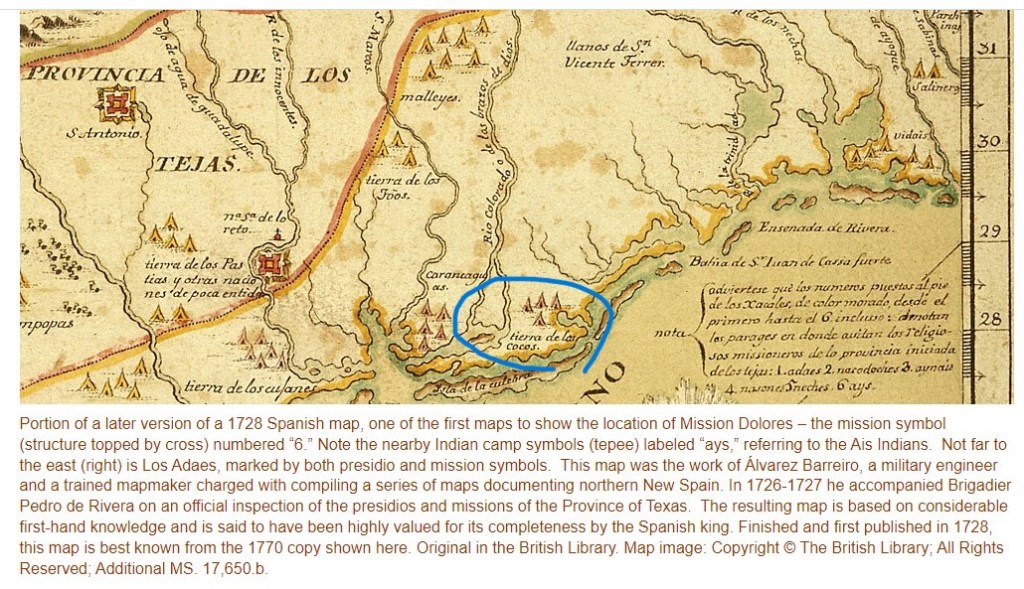
Source: texasbeyonghistory.net
Coco Indians in the mid 1700s
Texas or the Provincia of Tejas is not the Texas situation of 2023. When the Spanish and Franscican Jesuits spoke of The Province of Texas, they were referring to the East Texas/West Louisiana and the Indian tribes living in these areas such as:
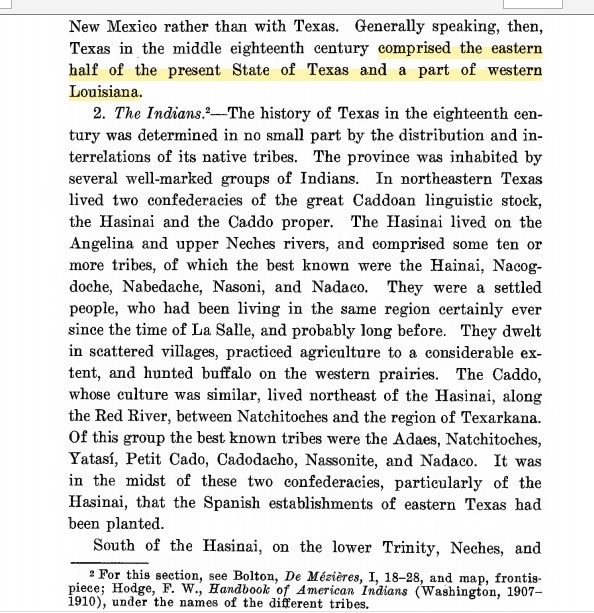
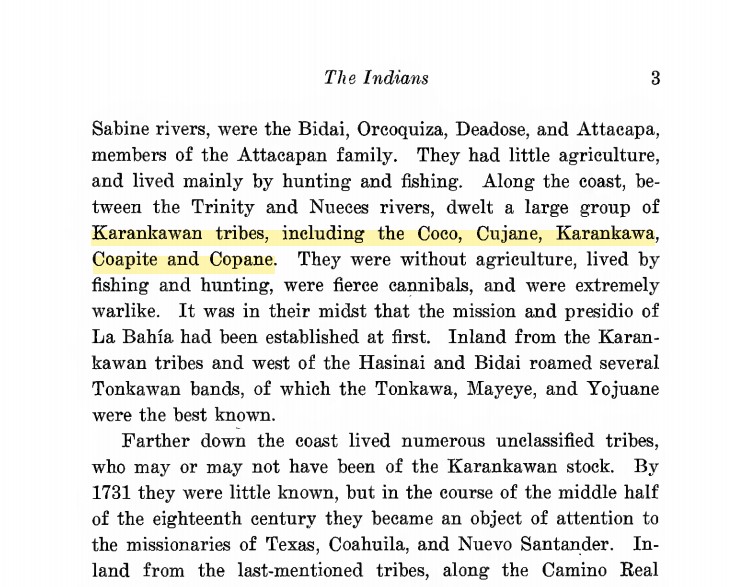
Source: Bolton, Herbert E. Texas in the middle 18th century. pgs 2-3. Berkeley. 1915.
The Hasinai or Cenis Indians are the Indians referred to as the Texas, Tejas, Provincia los Tejas, Tecos, Tachies etc. I think that the Coco Indians are the same as the Chocho Indians described in many Spanish records as the Shoshoni/Chuchone, but I’m still investigating the geography, migrations and colonial texts.
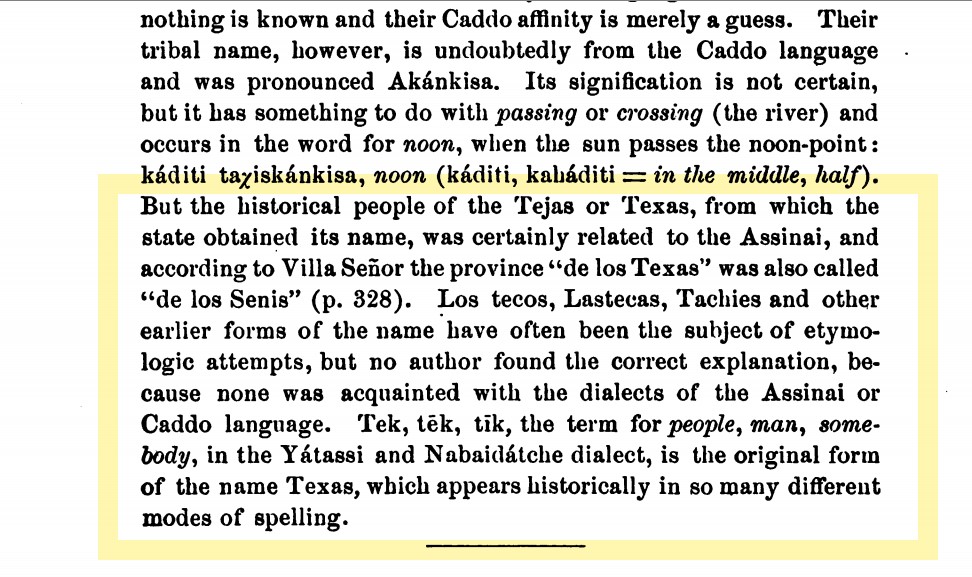
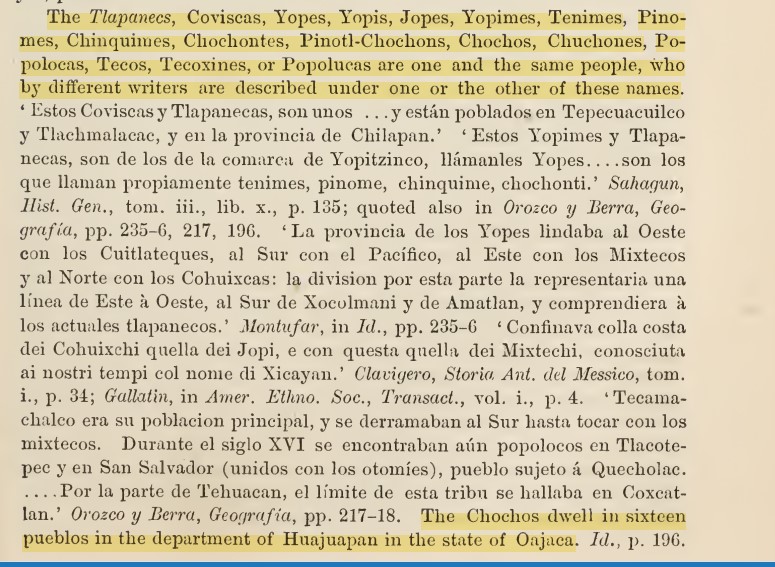
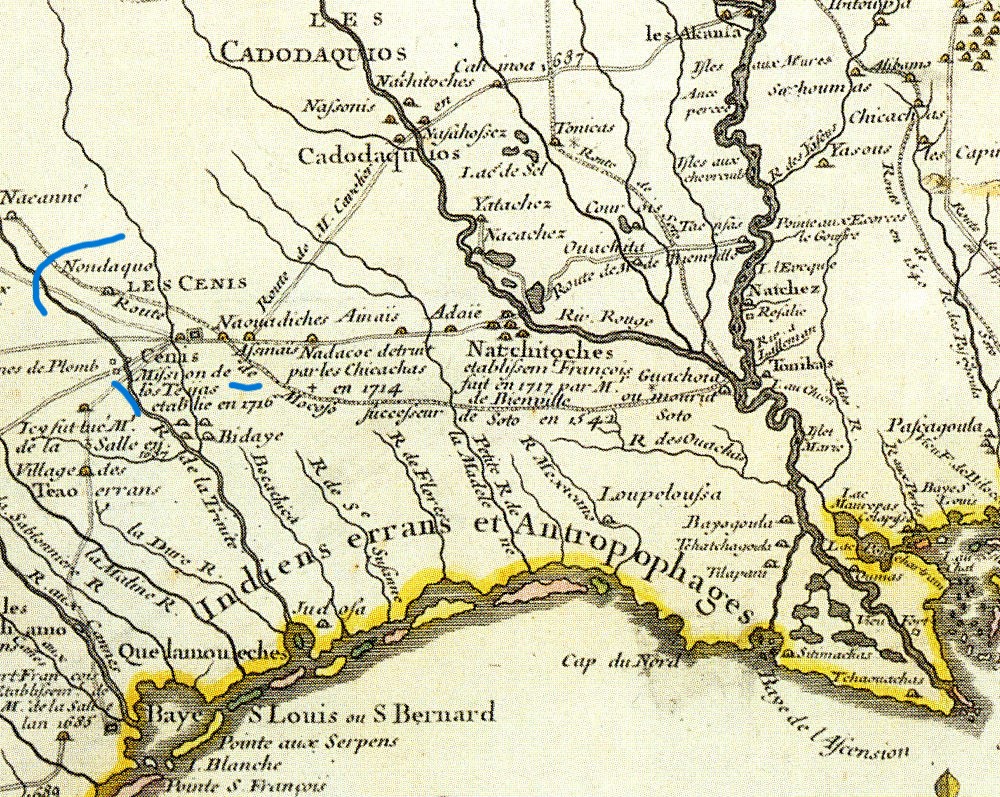
Source: Gatschet, Albert S. The Karankawa Indians: The coast people of Texas. Cambridge, Mass. 1891. Source: Bancroft, Herbert H. The Native Races of the Pacific States of North America. Vol 1. New York. 1874. Source: https://www.texasbeyondhistory.net/mitchell/ethnohistory.html
The south Texas coast tribes known as Karankawa today were referred to as Cujane or Coxanes before 1746 according to Bolton’s report, pgs 281-282. See below. This label, Coxanes, will lead to more posts and discussions on the possible connection of the Coco, Chocho, Tecos, Tecoxines, Karankawa, Shoshoni, and the Southeast Woodland tribes. I’m also investigating the placename, Texcoco.
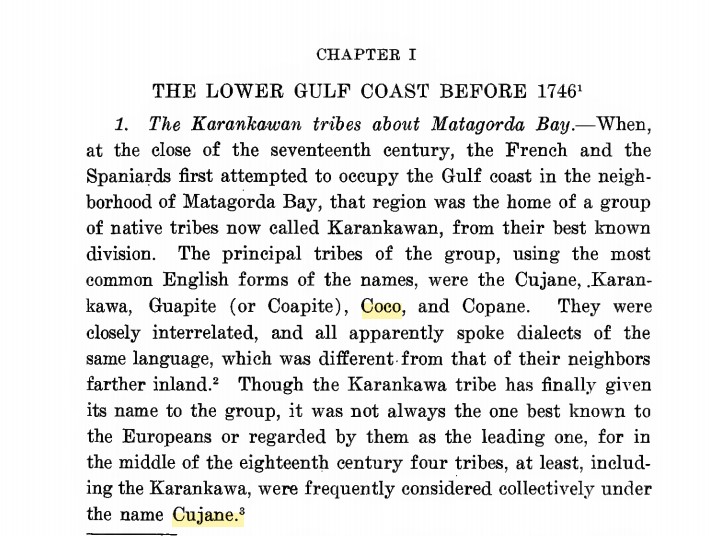
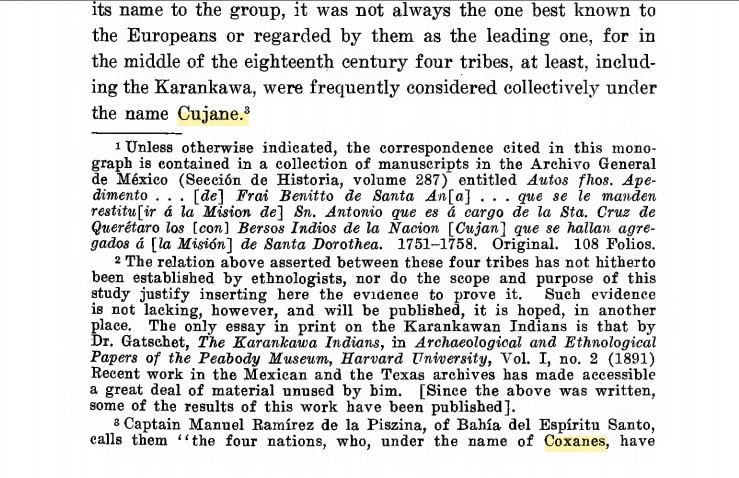

War with the Coco Indians
The Coco Indians were hounded by the “war dogs for Jesus” aka the Roman Catholic military orders of Fransciscans and Dominicans. The Coco are claimed as the Indians on the Gulf coast who interacted with Alvar Nunez Cabeza de Vaca, but as the Texas scholars aren’t certain, maybe Cabeza de Vaca doesn’t exist, and it’s all just a fantasy like the rest of Texas history. The Coco are associated with many Jesuit missions or military expeditions. See below.
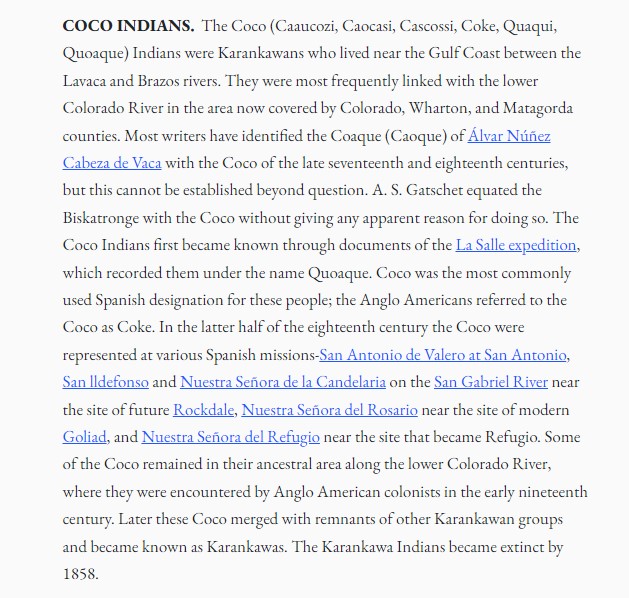
Source: https://www.tshaonline.org/handbook/entries/coco-indians
On pages 283-284, Bolton describes the attempts of the Spanish and French colonizers to subdue and convert the tribes living on the coast. He sites multiple reasons, but it seems the Coco or another coast tribe, under a pre-1746 name, such as Caocosi, gave the invaders a good fight. See below.
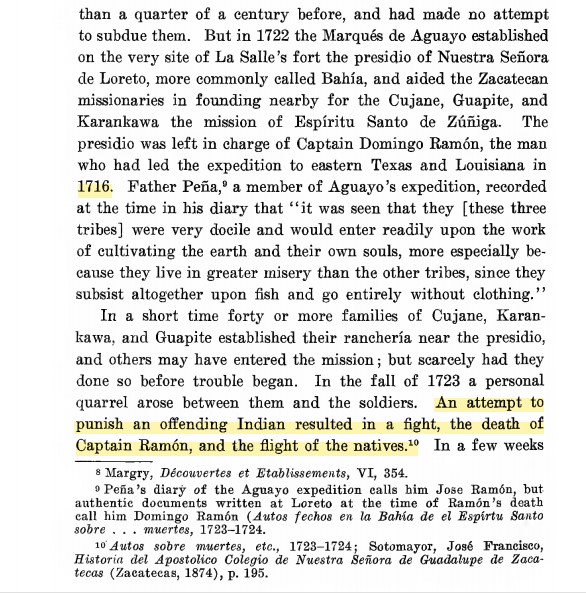
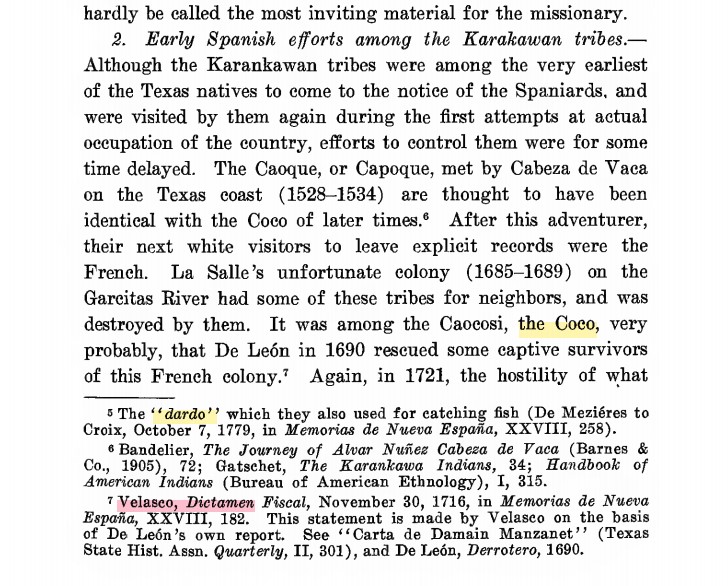
Of course the Coco couldn’t win all the battles posed by the flood of priest-soldiers who ship wrecked on the Matagorda coast. It has been noted that one, Stephen F. Austin, equipped some other Indian tribes to attack the Coco at the modern location of Anahuac. Apparently, the Coco Indian chief, his son, and 3 other tribesmen were killed in the attack. I’m not sure if Stephen F. Austin was really involved in this fight, but it’s recorded as an “Inter-ethnic conflict.”
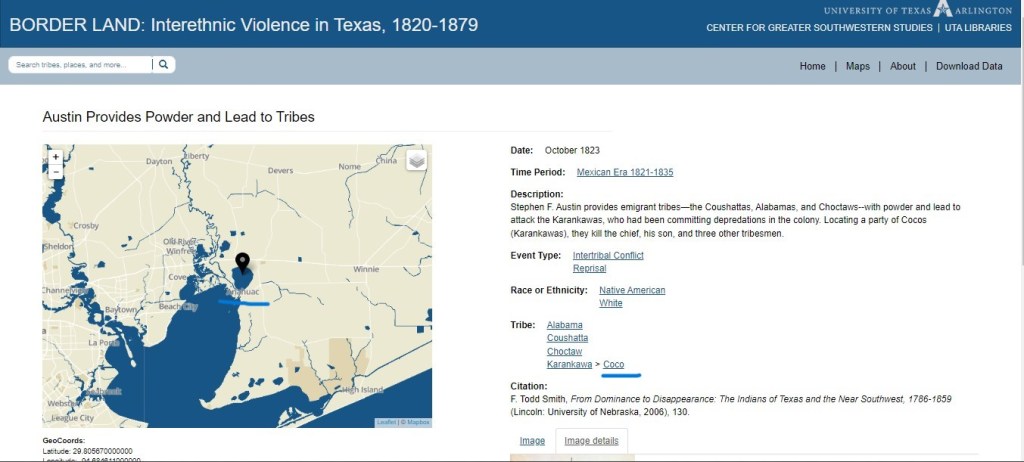
Source: https://library.uta.edu/borderland/event/484
Aside from what I call, geographical distortion, I’m making a lot of progress on the Shoshoni and Texas American Indians historically. My next posts will cover Texas maps, and questions about the supposed Shoshoni-Comanche kinship.
Thanks for stopping by!! Peace!!!!

 Shoshoni Texans
Leave a comment